
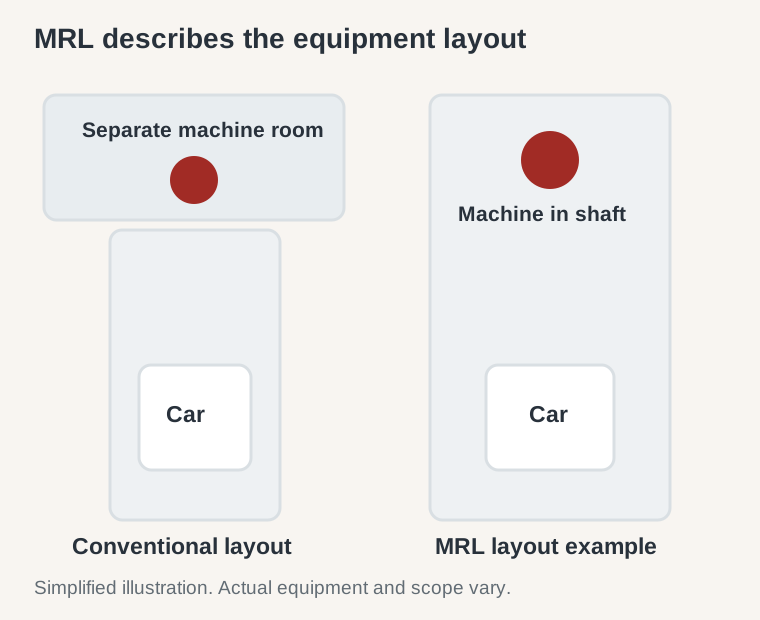
Machine-room-less, usually shortened to MRL, describes a lift layout that does not require a conventional separate machine room. It still contains machinery and controls. Their location depends on the equipment design.
MRL is a description of the layout rather than a third lifting principle alongside hydraulic and traction. Many MRL passenger lifts use compact traction machinery. Hydraulic arrangements without a conventional separate machine room also exist.
Where is the equipment?
In a common traction MRL arrangement, the drive machinery sits within the lift shaft. Controls may be provided in a cabinet at a landing or another designated location. Access arrangements vary between systems.
The comparison diagram shows the difference in principle between a separate machine room and machinery within the shaft. It is not a drawing of a particular manufacturer's installation or a statement of the space your building requires.
Why does this matter to a building owner?
It explains why a building may have a lift without an obvious machinery room. It also helps building managers understand why access to a particular landing, cabinet or other designated area can matter during servicing.
Keep the provider's access requirements with the building's operating information. Do not use an equipment area for storage or assume that a cabinet is an ordinary building services cupboard. Ask the responsible provider to identify the access arrangements for your installation.
Does MRL mean maintenance-free?
No. Doors, controls, drive equipment, suspension and protective systems still need the maintenance appropriate to that lift. The absence of a conventional machine room does not tell you the service frequency or which repairs a contract includes.
When reviewing a maintenance contract, provide the make, model and available service history. Ask the prospective provider to confirm support for the actual system, including the tools, parts and access it needs.
What about breakdowns and emergency arrangements?
The building needs clear contact and response arrangements for the installed equipment. A generic diagram cannot explain how a particular lift should be accessed or recovered after a fault.
Building staff should not open cabinets, enter the shaft or attempt machinery operations. Record the fault information available from public areas, contact the responsible provider and follow its directions. The emergency phone guide explains the separate communication questions to resolve with your provider.
Can an MRL lift be upgraded?
Potential work depends on the existing design, equipment compatibility, available parts and the scope being considered. A door equipment repair, control upgrade and full replacement have different implications.
Ask which parts would be changed, how access and downtime would be managed, and what associated building work or assessment might be required. Confirm the written scope before comparing costs. The MRL label alone cannot establish whether a particular upgrade is practical or which company can deliver it.